
 by
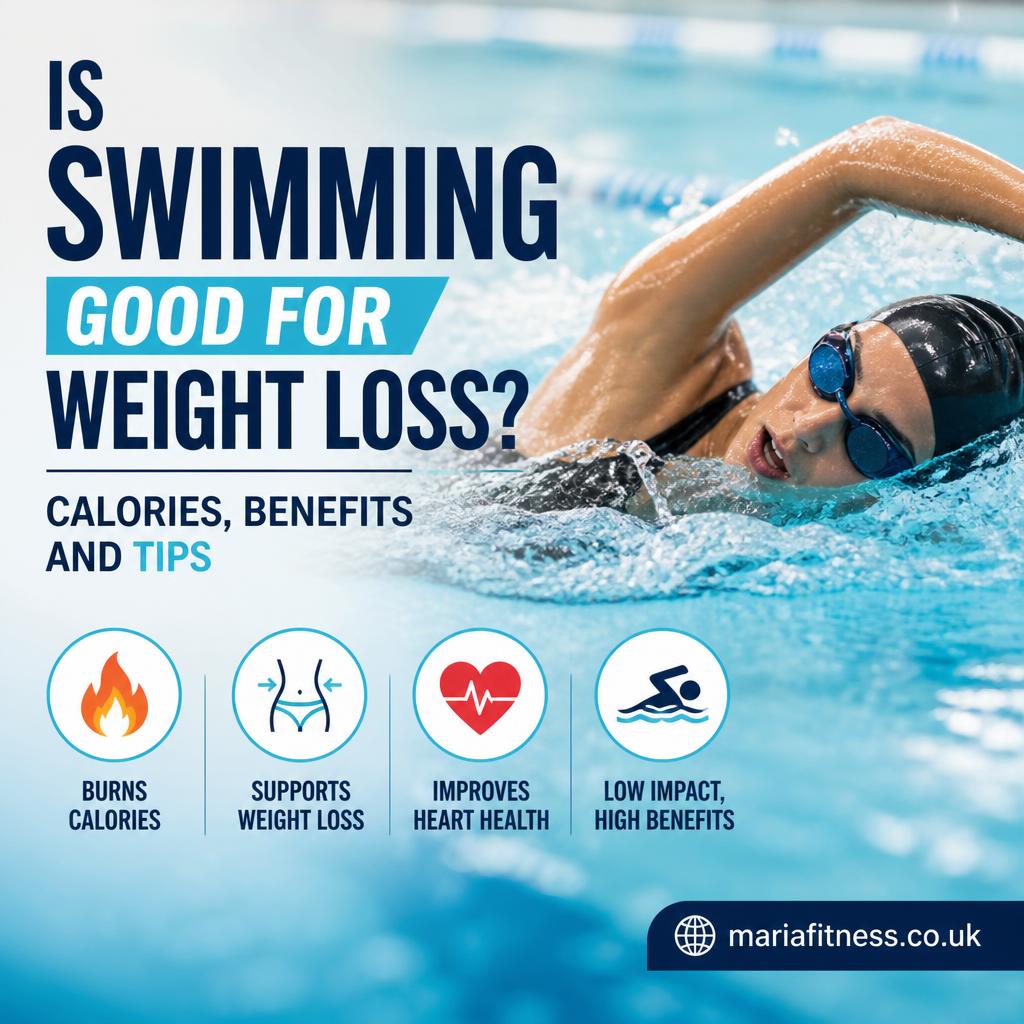
by Quick answer: Is swimming good for weight loss? Yes. It’s a full-body workout. It burns real calories. And it’s gentle on your joints. That combination makes it easier to stick with, which matters more than any single session.
How Many Calories Does Swimming Actually Burn?
A 30-minute swim at moderate intensity burns roughly 200-300 calories for most adults. Push the pace, and that number climbs fast.
Freestyle burns around 500-700 calories per hour. Butterfly can hit closer to 900, though it’s tough to sustain for long. Breaststroke and backstroke sit somewhere in between, easier to control, better for longer sessions.
Your exact number depends on your weight, your stroke, and how hard you push. But even a relaxed swim adds up meaningfully over a week.
Is Swimming Good for Weight Loss Compared to Running or Cycling?
Water adds resistance in every direction. Every stroke works against that resistance. That’s why swimming builds strength as well as cardio fitness, unlike most other cardio options.
It’s also completely non-weight-bearing. Your joints get a break from the impact that running or even walking creates. If you’re managing knee pain, arthritis, or recovering from injury, that matters a lot. Compared with cycling, which mostly works your lower body, swimming also engages your whole body at once.
Swimming also engages your whole body at once. Arms, legs, core, and back all work together. Few other exercises manage that in one session.
Does Swimming Preserve Muscle Better Than Other Cardio?
It seems to, yes. Water resistance loads your muscles throughout each stroke cycle, not just against gravity like most land-based cardio.
That matters during a calorie deficit. Losing weight often means losing some muscle too. Swimming appears to help limit that muscle loss better than pure cardio on land, which keeps your metabolism working in your favour.
How to Structure Swimming for Weight Loss
Steady, moderate-pace laps build your aerobic base and torch calories reliably. They’re also easier to sustain for beginners just getting started.
Interval sessions push harder. Short, fast bursts followed by easier recovery laps trigger a bigger afterburn effect, where your body keeps burning calories at a higher rate even after you’ve climbed out of the pool.
Mixing both styles across your week tends to work best. Steady sessions build the habit. Intervals push your fitness and calorie burn further once the basics feel comfortable.
Getting Started If You’re New to Swimming
Fifteen to twenty minutes is genuinely enough for most beginners. You don’t need to swim for an hour to get real benefit.
Focus on technique before speed. Poor form burns fewer calories and tires you out faster than it should. A few lessons early on pay off for months afterward, as this guide from MySwimPro explains well.
Consistency matters more than intensity when you’re starting out. Three sessions a week, even short ones, beats one exhausting swim followed by two weeks off.
Swimming Alone Won’t Do It All
Like any form of exercise, swimming works best paired with sensible eating. A calorie deficit still drives weight loss, whatever activity creates it.
If you’re already tracking your deficit but the scale isn’t moving, it’s worth checking the usual culprits. Our guide on why weight loss can stall in a calorie deficit covers the most common ones.
Final Thoughts
Is swimming good for weight loss? The evidence says yes, and it comes with fewer downsides than most other cardio options. Low impact, full-body engagement, and genuine calorie burn make it one of the more sustainable choices out there. Show up consistently, mix in some intervals, and pair it with decent nutrition. That combination is what actually gets results.
