 by
Low impact does not mean low value. It means at least one foot stays in contact with the ground, so your joints absorb far less force than they would from jumping, running, or bounding. For beginners, for anyone with sore knees, stiff hips, or a sensitive back, and for anyone exercising in a flat with neighbours below, that distinction matters enormously. You can build real strength, improve stamina, and feel fitter without a single jump.
This plan is designed for beginners who want a gentle starting point, or who tried a higher-impact routine and found it uncomfortable. It uses no equipment, takes 20–30 minutes, and can be done in a space no bigger than a rug. It shares its core movements with our beginner home workout plan for women over 40, so if you later feel ready for a more challenging programme, the transition is straightforward.
Speak to your GP or another qualified health professional before starting if you have a health condition, have been inactive for a long time, or are recovering from an injury. Stop if you feel sharp pain, dizziness, or chest pain. Muscle effort is expected; joint pain that lingers, swelling, or pain that changes how you walk afterwards is a signal to modify the exercise or seek advice.
What "low impact" actually means
Impact describes how much force travels through your joints when you land. In a jump, both feet leave the ground and land together, and your knees, hips, and ankles absorb that force. In a low-impact movement, you step rather than jump, keep one foot on the ground while the other moves, and lower yourself under control rather than dropping.
Low impact is also about tempo. Fast, jerky movement is harder on joints than slow, controlled movement, even for the same exercise. Aim for two seconds to lower and one second to lift, and never bounce at the bottom of a squat or lunge. Control is not a compromise for beginners; it is the skill that makes every later progression safe.
Who this plan suits
It suits anyone with knees that complain on stairs, hips that feel stiff in the morning, or a back that prefers careful movement. It suits anyone returning to exercise after illness, injury, pregnancy, or a long sedentary period, provided a health professional has cleared you to exercise. It suits older beginners, and women over 40 who want strength and stamina without high-impact stress. And it suits anyone in a flat or shared house who needs a quiet workout: nothing here will thud through a ceiling.
How the plan works
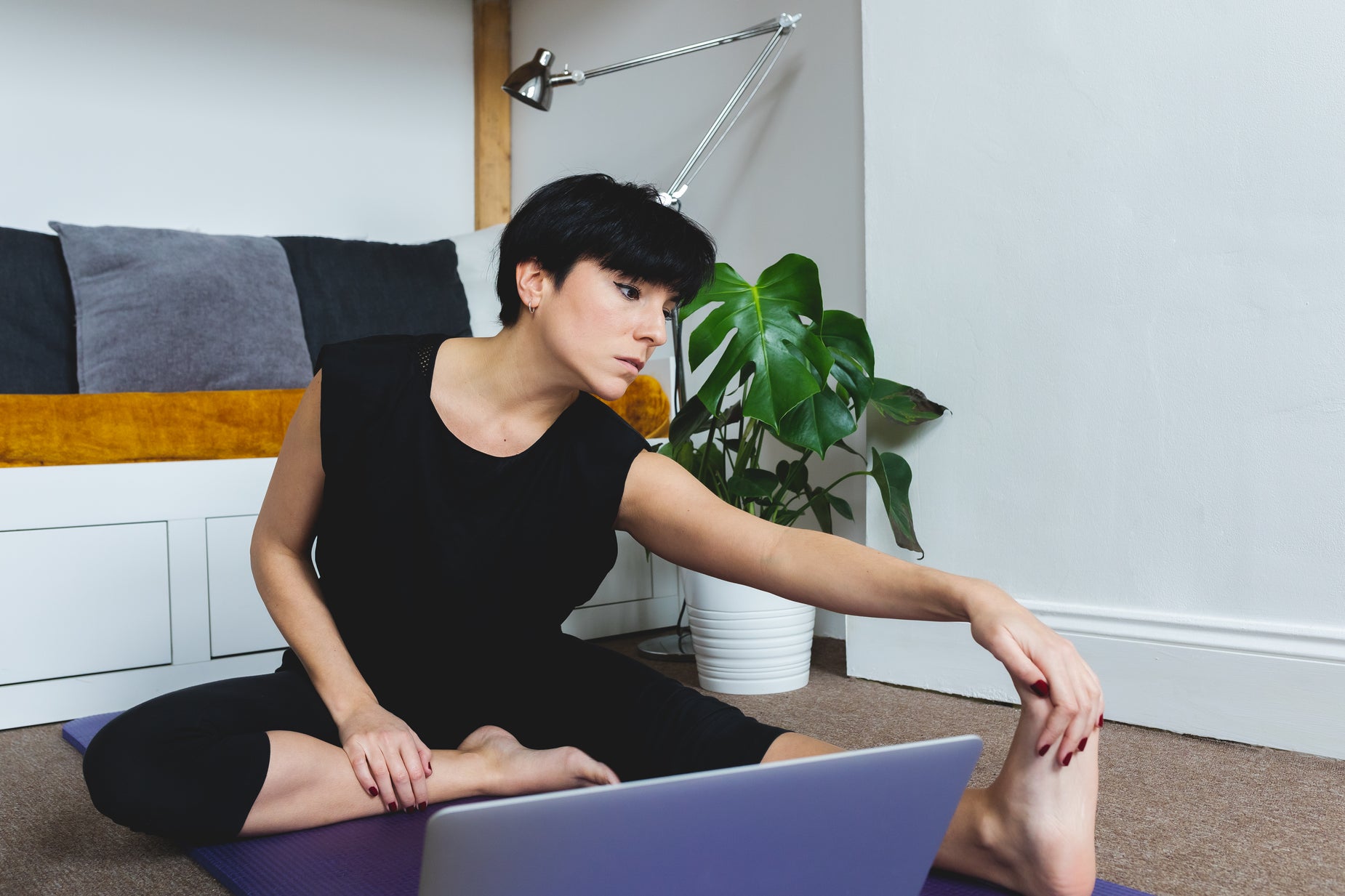
Train two or three times a week, on non-consecutive days, for 20–30 minutes including warm-up and cool-down. Each session has the same structure: a five-minute warm-up, a strength circuit, a gentle cardio section, and a five-minute cool-down.
The warm-up is gentle by design: one minute marching on the spot, 10 arm circles each way, 10 slow hip circles each way, 10 seated or standing knee lifts, and 10 shoulder rolls, all within a comfortable range. The cool-down is slow stretching for hamstrings, quadriceps, calves, glutes, chest, and shoulders, held for 20–30 seconds each without bouncing, plus a few slow breaths. If you feel stiff the next morning, a short walk and these stretches on your rest day will usually help more than complete rest.
The workout: strength circuit
Do each exercise for the repetitions or time shown, moving slowly and resting 30–45 seconds between exercises. Complete the circuit twice in your first week, and three times from week three onwards if you feel ready. Breathe steadily — exhale on the effort, inhale as you return.
1. Chair squat — 8–10 repetitions
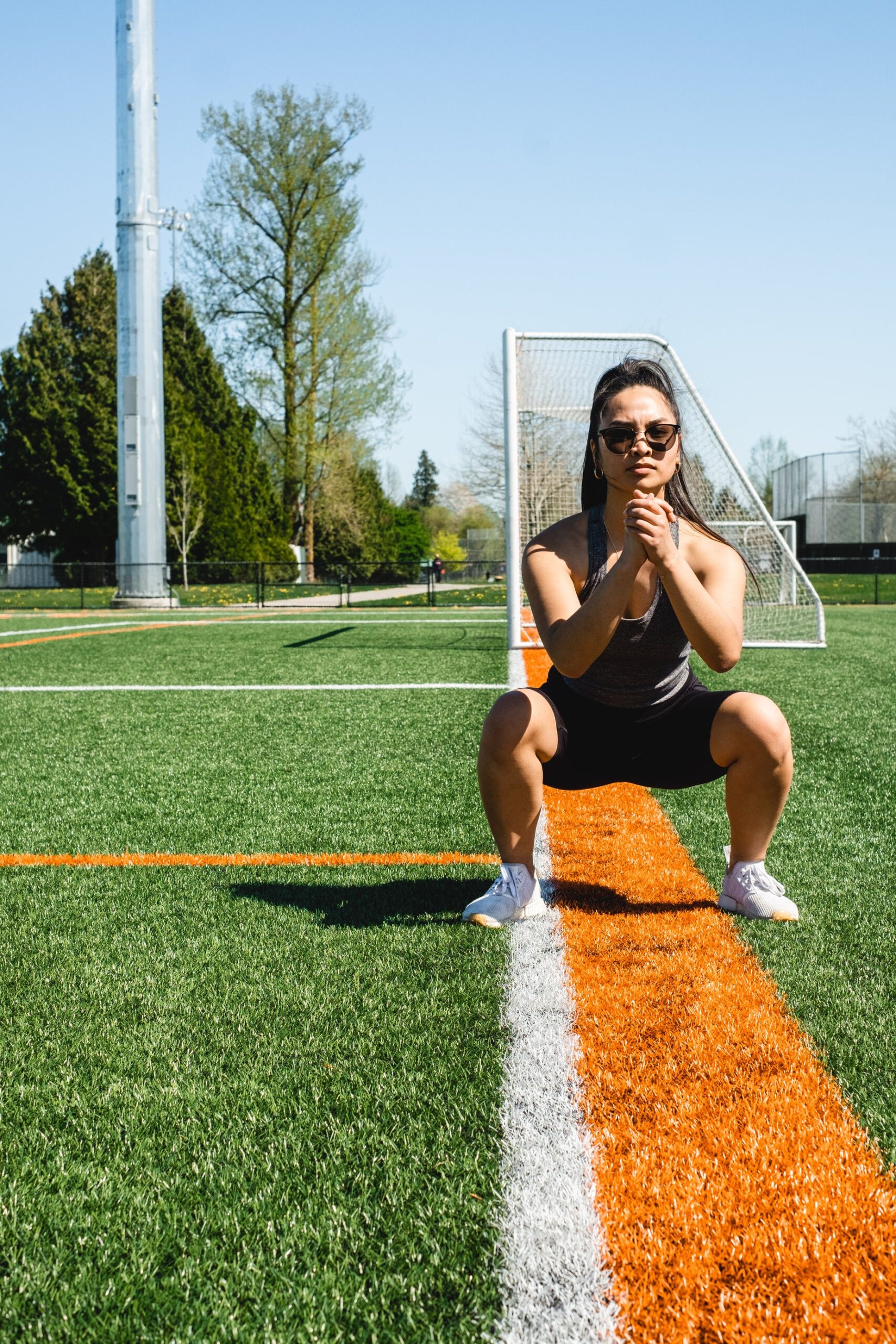
Stand in front of a sturdy chair, feet hip-width apart, toes slightly out. Push your hips back, bend your knees, touch the seat lightly, and stand tall through your heels. Keep your chest lifted and knees in line with your toes. The chair gives you both a target and a safety net: if you lose balance, you simply sit down.
2. Glute bridge — 10–12 repetitions
Lie on your back, knees bent, feet flat. Press through your heels, squeeze your glutes, and lift your hips until your body forms a straight line from shoulders to knees. Hold for two seconds, then lower slowly. Glute bridges strengthen hips and hamstrings without loading the knees, which is why they appear in almost every joint-friendly programme.
3. Wall press-up — 8–10 repetitions
Stand arm's length from a wall, hands flat at shoulder height. Bend your elbows, lower your chest towards the wall, and press back, keeping your body straight from head to heels. Wall press-ups load shoulders and wrists far less than floor press-ups, and stepping further from the wall is an easy, gradual way to make them harder.
4. Seated or standing row — 10–12 repetitions
Sit tall on a chair or stand with feet hip-width apart, holding a towel or band looped around your feet or a sturdy post — or simply practise the movement with no resistance at first. Pull your elbows back past your waist, squeezing your shoulder blades together, then reach forwards slowly. Rows counter the rounded posture that comes from sitting, driving, and phone use, and strengthen the muscles supporting your shoulders and upper back.
5. Standing knee lift with arm reach — 8 per side
Stand tall, holding a chair lightly if you need balance. Lift one knee to a comfortable height while reaching the opposite arm overhead, then lower and repeat on the other side. This is a balance exercise disguised as a gentle cardio move: it trains single-leg stability, coordination, and core control without any impact.
6. Dead bug — 6 per side
Lie on your back, arms towards the ceiling, knees bent at 90 degrees. Press your lower back into the floor, then slowly extend one arm and the opposite leg, keeping your back flat. Return and switch sides. If your back arches, shorten the reach. The dead bug builds core stability without sit-ups or strain on the neck or lower back.
7. Calf raise with support — 12–15 repetitions
Stand behind a chair, hands lightly on the back for balance. Rise slowly onto the balls of your feet, hold for two seconds, and lower slowly. Calf raises strengthen the lower legs and ankles, supporting balance and walking, and they are a useful, gentle way to finish the strength section.
The workout: gentle cardio section
After the strength circuit, do 8–10 minutes of low-impact cardio. Pick three or four moves and do each for 60–90 seconds, with 30 seconds of marching on the spot between them. Keep your effort at a level where you can talk in short sentences — that is moderate intensity, and exactly where beginners should be.
Marching on the spot: Lift your knees alternately, swinging your arms naturally. Add higher knees or bigger arm swings for more effort, but keep one foot on the ground at all times.
Step jacks: Step one foot out to the side, then the other, raising your arms to shoulder height, then step back in. This is the low-impact version of a jumping jack, with the same side-to-side movement and far less joint stress.
Step-back and knee lift: Step one foot back as in a reverse lunge, return to standing, then lift the same knee in front of you. Alternate sides. This combines balance, leg strength, and cardio in one flowing movement.
Shadow boxing, seated or standing: Punch gently forwards, alternating arms, while marching on the spot or sitting tall in a chair. Done at a controlled pace, shadow boxing raises your heart rate and improves coordination without stressing your joints.
Side steps with arm reach: Step sideways, bring your feet together, and reach both arms overhead, then step back. Repeat in both directions. Side steps train lateral movement, which most forward-and-back routines neglect, and which matters for balance in real life.
A sample week
Train on Monday, Wednesday, and Friday (or Monday and Friday plus one other day), with walks, gentle stretching, or gardening on rest days and a longer walk or a rest day at the weekend. This sits well alongside the UK guidance to aim for at least 150 minutes of moderate activity a week, plus strengthening on at least two days.
Knee-friendly swaps
If a squat hurts your knees, try these changes in order: squat to a higher chair; shorten the range so you only lower part-way; widen your stance slightly and turn your toes out a little more; and slow the movement down. If lunges bother you, replace them with step-backs that barely lower, or with extra glute bridges and calf raises. If kneeling is uncomfortable, do planks standing against a wall, and dead bugs as described, which need no kneeling at all.
Do not force a deep squat through knee pain, do not bounce at the bottom of any movement, and do not train through swelling. Soreness in the thigh muscles the next day is normal; pain inside the knee joint, pain that alters how you walk, or swelling after a session are reasons to modify the exercise and, if they persist, to seek professional advice. A physiotherapist can often fix a knee problem with a small form change that an article cannot diagnose.
Progressing gently
Progress in a low-impact plan looks different from progress in a high-impact one. You are not aiming to jump higher; you are aiming to move better, for longer, with more control. After two weeks, choose one progression at a time: add a third round of the circuit; add two repetitions to each strength exercise; lengthen cardio from 8 minutes to 12, then 15; move from wall to knee press-ups when 12 good wall repetitions feel easy; let go of the chair during knee lifts and calf raises once balance feels steady; or add a light band to the row and glute bridge.
Progress one thing per week, and only when the current level feels comfortable. If a progression causes joint pain, step back to the previous level for another week. Progress that you keep is worth far more than progress you abandon because it hurt.
Common beginner mistakes
Go slowly: two seconds down, one second up, with a pause where the exercise asks for one. Do not hold your breath, and do not skip the warm-up because the workout feels gentle. A low-impact plan is not a lesser plan — it is designed to be repeated for months without injury.
Frequently asked questions
Can low-impact workouts build strength?
Yes. Strength comes from muscles working against resistance with good form and progressive overload — more repetitions, sets, or resistance over time — not from impact. Chair squats, glute bridges, rows, and press-ups all build strength without jumping.
Is this plan suitable if I have arthritis or bad knees?
Many people with joint problems are advised to keep moving with low-impact activity, but the right exercises depend on your individual condition. This plan's joint-friendly choices are a reasonable starting point to discuss with your GP or physiotherapist, not a prescription. If an exercise causes joint pain or swelling, modify it or leave it out and seek advice.
How is low impact different from low intensity?
Impact is about force through your joints; intensity is about how hard your heart and muscles work. You can have a low-impact, moderate-intensity workout — brisk marching, step jacks, and circuit strength work will raise your heart rate and leave you warm and slightly breathless — without any jumping.
Related reading
- Beginner Home Workout Plan for Women Over 40 UK (pillar)
- 4-Week Beginner Workout Plan at Home (No Equipment)